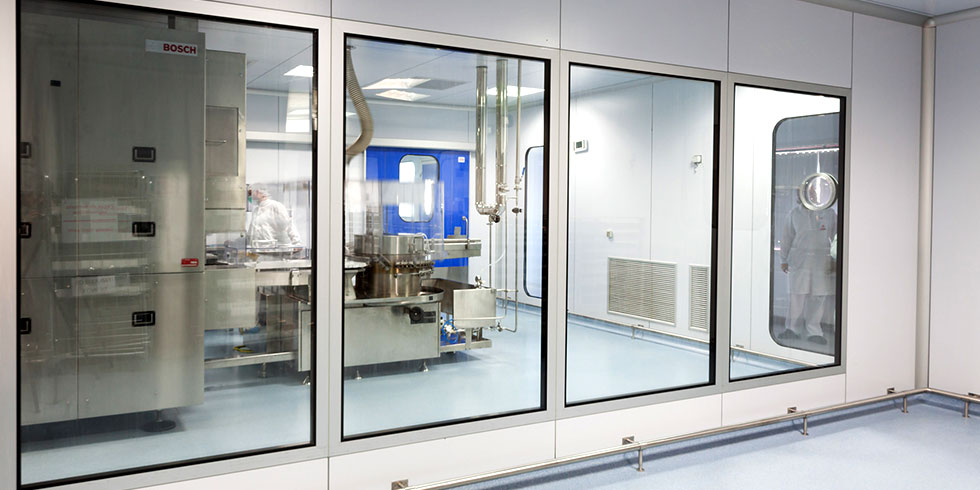
Clean rooms: everything you need to know.
Read this interesting insight from Delta2000, an international player in cleanroom manufacturing.
In this article we look, in detail, at some aspects concerning these sterile environments: from their meaning and origin to their operation. From the regulations defining them to their classification. Not forgetting their scope of use.
1. Cleanroom: meaning and origins
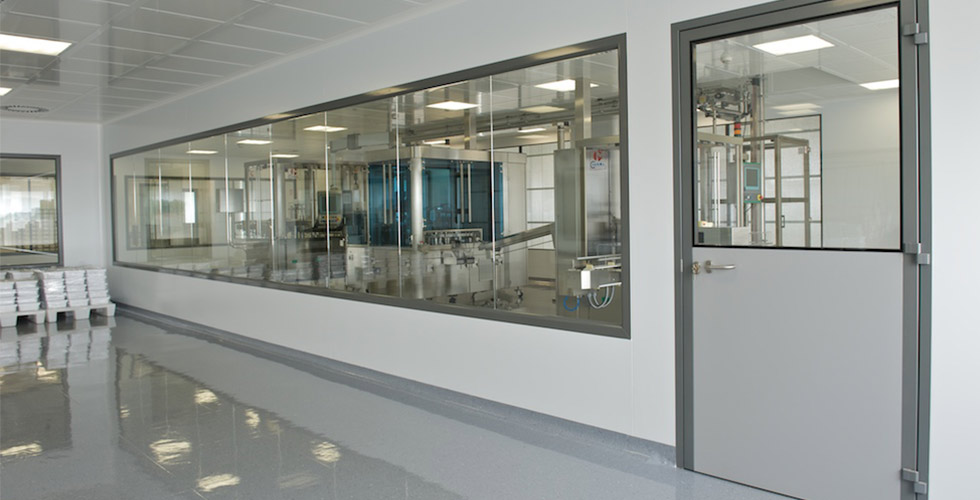
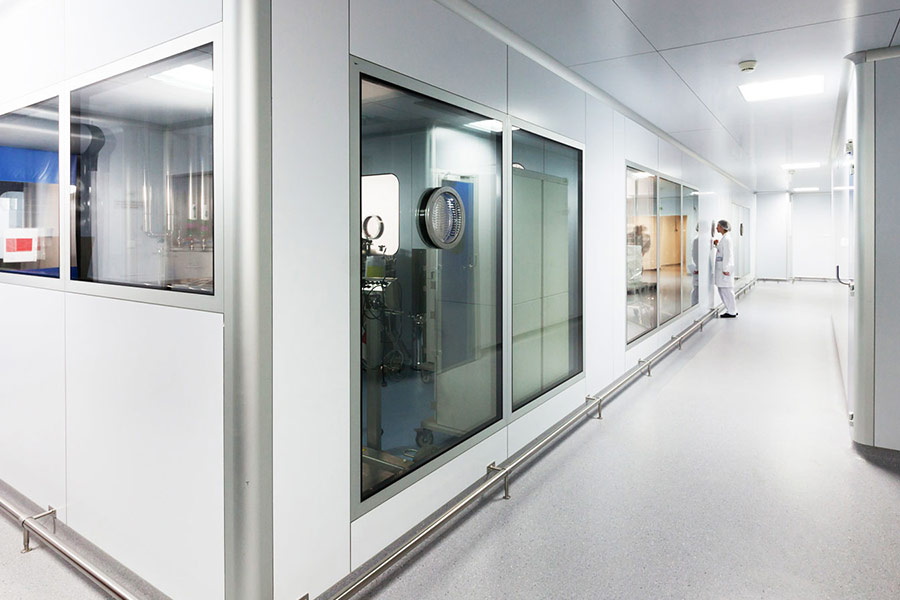
The clean room is also referred to as a “clean laboratory.” All clean rooms, are used in industrial and scientific research, used as chemical, mechanical and/or electronic laboratories.
The main distinguishing feature of each cleanroom is the presence of very pure air, that is, with a very low content of suspended microparticles of dust, guaranteed by forced recirculation in a sealed environment from the outside.
Although the Italian term is clean room, the English version “cleanroom” is widely used and widespread internationally.
But, what exactly is a clean room?
We can define it as a “room” with a controlled atmosphere: the main reference values are atmospheric pressure, humidity and particle pollution.
It is crucial not to confuse, however, the clean room with the hyperbaric chamber (pressure-controlled) or sterile chambers (microbiologically controlled) or, again, with anechoic chambers that, instead, screen electromagnetic or sound signals.
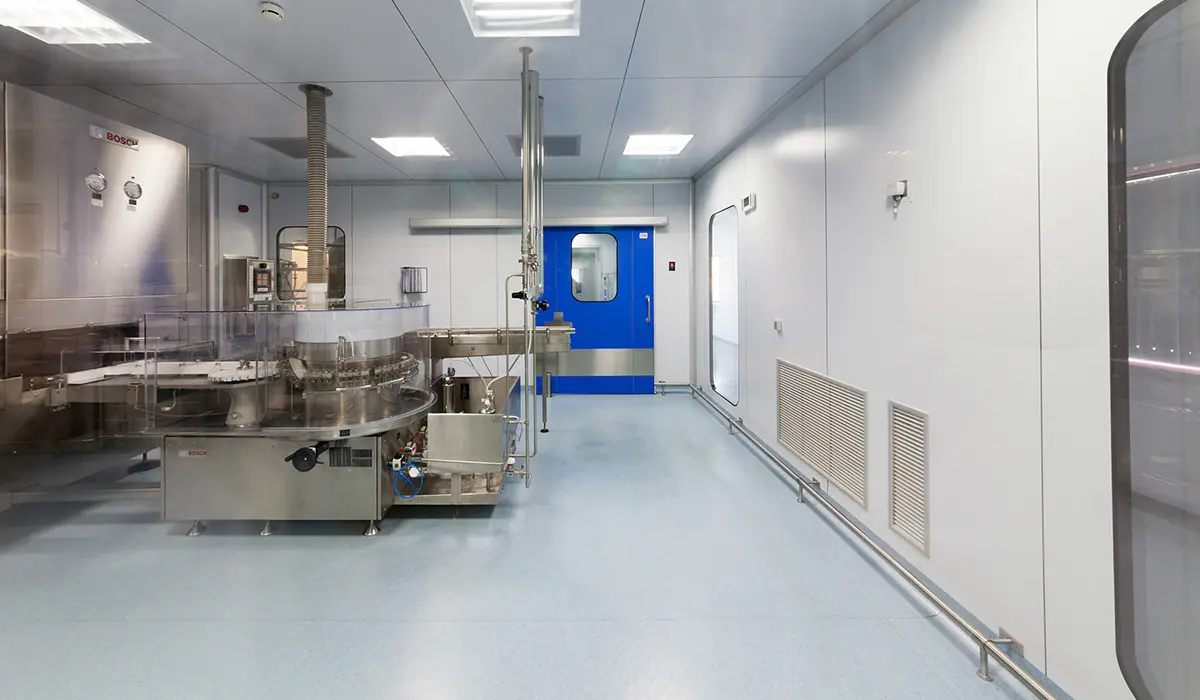
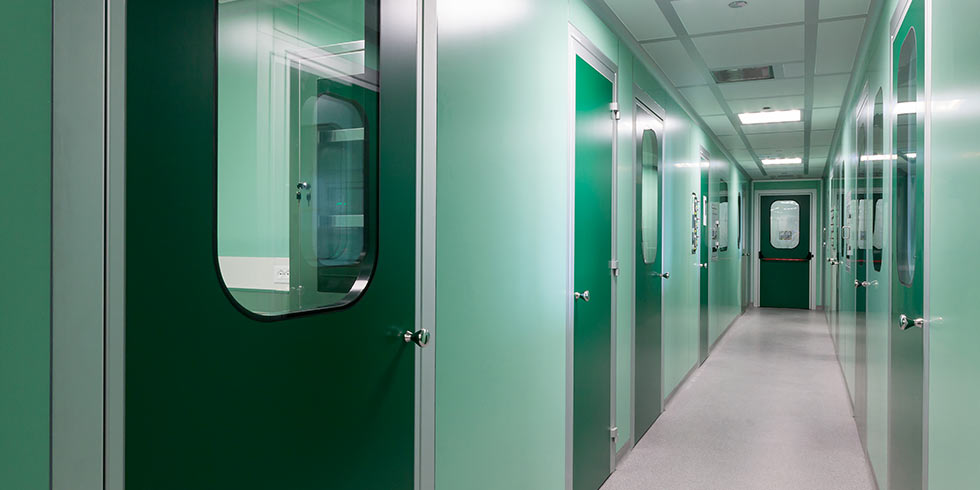
All cleanrooms produced by Delta2000, are designed for use in contamination-controlled areas and are intended for multiple sectors: Pharmaceutical, Biomedical, Chemical, Cosmetic and Food.
Not forgetting the structured projects for the hospital sector. Sector, as anticipated, of origin of the same.
2. Operation of clean rooms
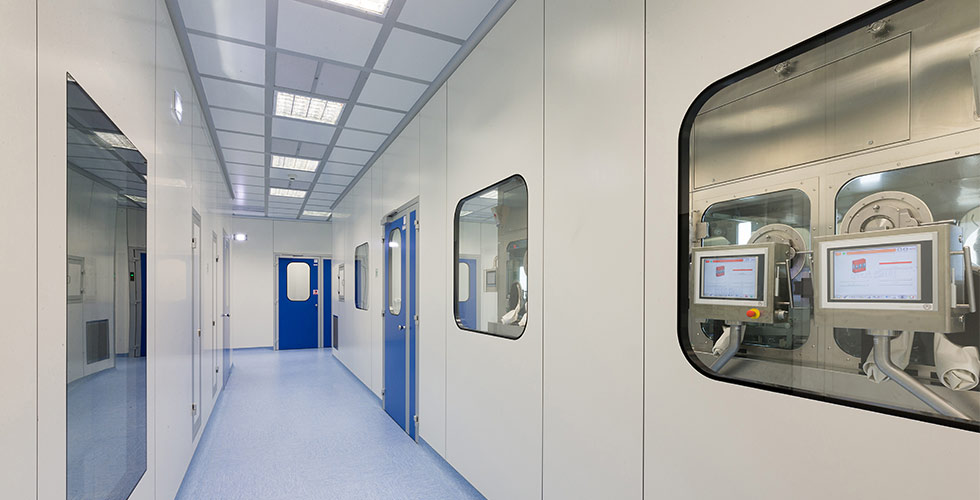
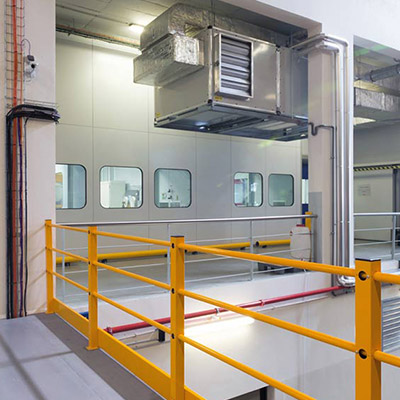
The operation of a clean room is based on the principle of forced recirculation of super-filtered air in a sealed room.
The system consists of large fans operating at low speed, which feed a laminar flow of air into the room through the ceiling that has already been previously filtered by HEPA (High Efficiency Particulate Air Filter) filters and sucked in through grilles placed on the floor.
The direction of airflow input divides the clean rooms into:
- Clean room with turbulent flow
- Unidirectional vertical flow clean room
3. Classifications and Reference Standards of Cleanrooms.
The pioneers of this technology are the U.S., which is why the first clean room classification law originated in the United States, U.S. Federal Standard 209E, published in 1963 as “Cleanroom and Work Station Requirements, Controlled Environments.”
The other standards considered most relevant to the measurement and classification of clean environments are:
- UNI EN ISO 14644-1
- British Standard 5295
- EU GMP
- VDI 2083
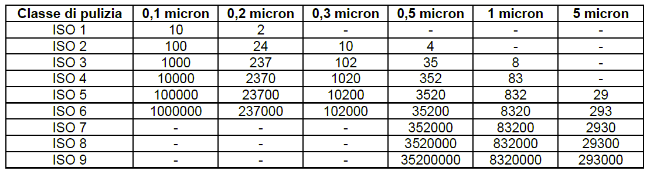
Of all of them, the one that is considered as a reference today, globally, is UNI EN ISO 14644-1, which defines the maximum concentrations of particles contained in one cubic meter of air, in relation to different classes of cleanliness.
4. Use of clean rooms
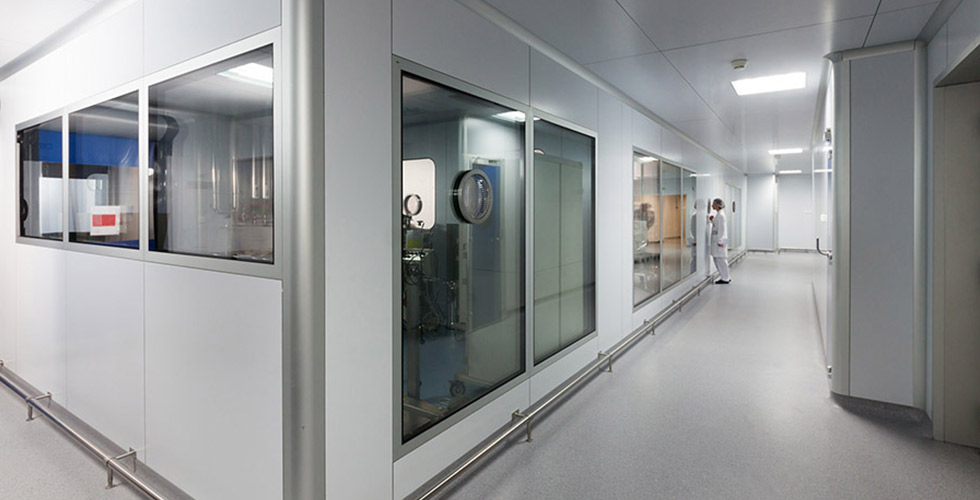
The origins of theuse of clean rooms can be attributed to the early microelectronics industries, particularly they were used to process semiconductors, which, as they increasingly needed to increase both production efficiency and product quality, in terms of purity, increasingly pushed toward the development of contamination-controlled environments.
In the semiconductor manufacturing process, in fact, airborne particles (micro-dusts) risk irreparable damage to the micro-photoengravings that form CHIPs, creating a defective electronic circuit and, consequently, scrap.
The development of industrial processes has forced the improvement of production environments by removing particles from the air, with two main purposes:
- Increased production efficiency
- Increased quality
Cleanroom classification is based on counting microparticles in a defined volume of air.