When it comes to cleanrooms, the ISO 14644 standard is the definitive international benchmark.
It defines how to classify air cleanliness, how to design and construct controlled-contamination environments, how to monitor them over time, and how to conduct verification tests. Yet, despite its importance, the standard is often misunderstood or applied incompletely—with potentially serious consequences in terms of noncompliance and production inefficiency.
In this article, Delta 2000 — a leading international partner in the design and manufacture of cleanrooms —provides a comprehensive, sector-specific overview of the ISO 14644 standard: what it requires, how it is applied in various industrial sectors, and how it relates to the main national and international reference standards.
1. The ISO 14644 Series: Structure and Scope
The ISO 14644 standard is not a single document, but a series consisting of several parts, each dedicated to a specific aspect of cleanrooms and controlled-contamination environments (cleanrooms and clean zones).
The series is developedby ISO/TC 209 —the international technical committee dedicated to this field—and is periodically updated to reflect technological and regulatory developments in the sector.
The provisions currently in force that are of the greatest practical significance are:
- ISO 14644-1 (2015): Classification of air cleanliness based on particle concentration. This is the core part of the series: it defines the cleanliness classes from ISO 1 to ISO 9, the sampling methods, and the statistical criteria for classification.
- ISO 14644-2 (2015): Monitoring to demonstrate ongoing compliance with ISO 14644-1. It specifies the frequency and methods of periodic monitoring required to maintain the classification over time.
- ISO 14644-3 (2019): Test Methods. Describes procedures for verifying the performance of cleanrooms: filter testing, air velocity measurement, physical barrier leak testing, and differential pressure verification.
- ISO 14644-4 (2022): Design, Construction, and Commissioning. This standard defines the requirements and recommendations for the design and installation of new cleanrooms, including criteria for selecting materials and HVAC systems.
- ISO 14644-5 (2004): Operational Management. This standard covers the operating procedures, staff training, maintenance, and documentation required for the day-to-day management of cleanrooms.
- ISO 14644-10 (2013): Classification of surface cleanliness based on chemical concentration. This standard extends the concept of classification from air cleanliness to surface cleanliness, which is particularly relevant for the electronics and pharmaceutical industries.
2. ISO 14644-1: Air Cleanliness Classification
Part 1 of the standard is the one that anyone working in cleanrooms deals with on a daily basis. It introduces the ISO classification system—ranging from ISO 1 (the most restrictive) to ISO 9 (the least restrictive)—based on the maximum allowable concentration of particles per cubic meter of air, for particles of various sizes.
Classification is performed using measurements taken with optical particle counters, according to a statistical sampling plan that takes the size of the environment into account.
The results must comply with the limits specified in the standard for the declared class, both under “at rest” conditions (plant shut down, no operators) and under “operational” conditions (plant in production, with operators).
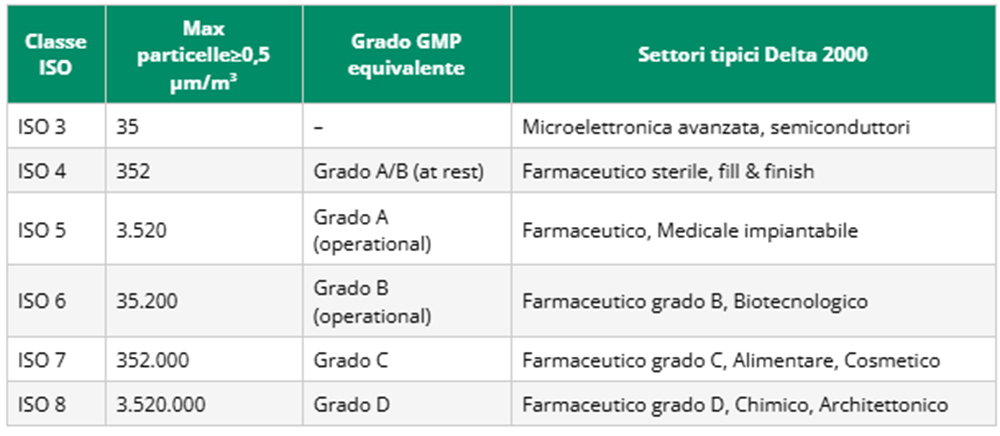
REGULATORY REQUIREMENT: The ISO classification is not permanent; it must be verified periodically in accordance with ISO 14644-2. For an ISO Class 7 environment, the minimum verification frequency is every six months under “at rest” conditions. For more stringent classes (ISO Class 4 and above), the frequency may be higher, depending on the environment’s risk profile.
3. Operational Phases: Design, Monitoring, and Testing
ISO 14644-4: Designing Correctly from the Start
Part 4 of the standard—updated in 2022—is of greatest interest to those who need to design or renovate a cleanroom.
It provides guidelines for selecting the ISO class based on the production process, for choosing construction materials (walls, floors, suspended ceilings, doors), for sizing the HVAC system, and for managing the flow of personnel and materials.
A key element of ISO 14644-4 is the concept of design qualification (DQ): before construction begins, it must be documented that the design is consistent with the functional requirements of the environment.
This approach—borrowed from the pharmaceutical industry and increasingly adopted across all sectors—makes it possible to identify critical issues early on, reducing the risk of costly corrective actions after installation.
ISO 14644-3: Performance Verification Tests
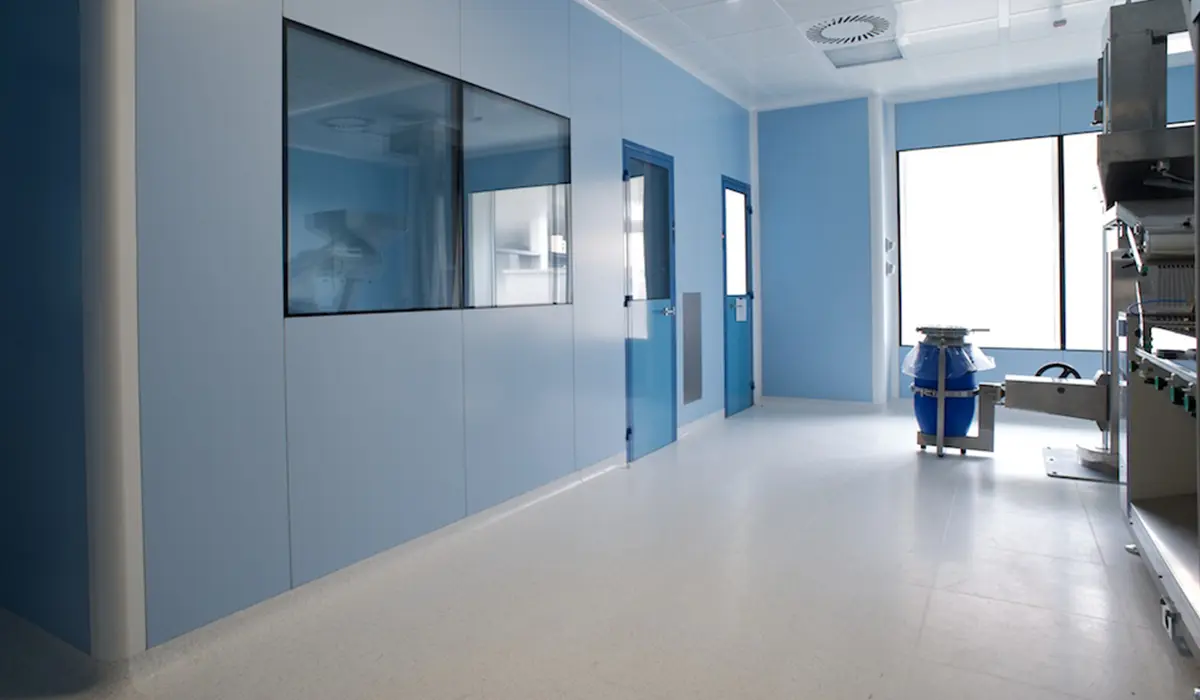
Part 3 of the standard defines the methods for verifying that the cleanroom meets the stated specifications.
The main tests include: measurement of particle concentration (for ISO classification), HEPA/ULPA filter leak and integrity testing (DOP/PAO tests), measurement of airflow velocity and distribution, verification of the differential pressure between adjacent zones, and the recovery test, which measures the rate at which the chamber returns to its nominal class after a disturbance.
These tests must be performed by qualified personnel using calibrated equipment, and the results must be documented in a traceable manner.
Delta 2000 assists its customers in organizing and documenting these qualification activities.
4. ISO 14644 by Sector: How It Applies in Different Industrial Contexts
One of the most important—and often underestimated—aspects is that the ISO 14644 standard does not specify which ISO class to adopt for each type of production: this is the responsibility of specific industry regulations (GMP, FDA, ISO 13485, HACCP, etc.) or the client itself, based on a risk analysis.
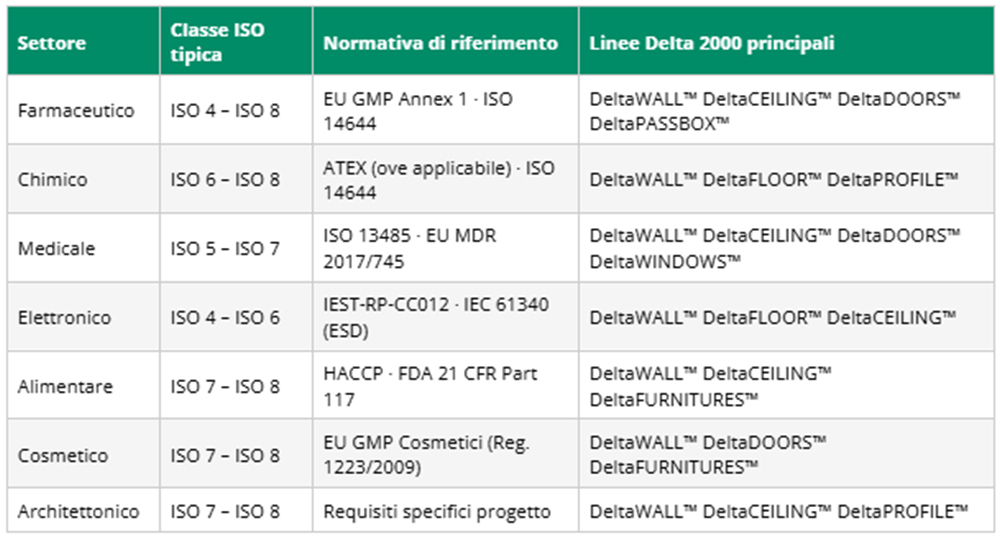
ISO 14644 specifies how to measure and maintain air cleanliness; industry standards define the required levels. Delta 2000 operates in seven major sectors.
The following table summarizes the ISO classes typically used in each case, the relevant standards, and the most suitable product lines:
Pharmaceutical and Biotechnology
This is the sector in which the regulations are the most stringent and detailed.
The primary reference isEU GMP Annex 1 (2022 revision), which correlates GMP grades (A, B, C, D) with ISO classes and introduces the Contamination Control Strategy (CCS).
Pharmaceutical cleanrooms typically require ISO Class 4–8, with aseptic filling processes performed in Class A (ISO 4–5) environments within isolators or RABS.
Chemist
In the chemical industry, cleanrooms are required for the production of high-purity substances, laboratory reagents, and chemical (non-biological) active ingredients.
The typical classes are ISO 6–8.
Where flammable or explosive substances are present, the design must also comply with ATEX regulations, which impose specific requirements on materials, electrical installations, and ventilation systems.
Medical
The manufacture of medical devices—particularly Class II and III devices according to the European MDR classification—requires controlled environments certified to ISO 13485 and, for sterile devices, compliant with GMP requirements.
The most common ISO classes are ISO 5–7. The critical aspect in this sector is document traceability, which must cover the entire product lifecycle.
Electronics and Microelectronics
This is the sector that historically gave rise to the very concept of a cleanroom.
Particle contamination compromises the photolithography, deposition, and etching processes used in the manufacture of integrated circuits.
The required cleanliness classes are among the most stringent: ISO 3–6, with process areas that can reach ISO 1.
In addition to particle concentration, electrostatic discharge (ESD) control is essential in this sector, which requires conductive or antistatic flooring—such as DeltaFLOOR™ solutions—and certified construction materials.
Food
In the food industry, cleanrooms—often referred to as high-hygiene environments (HHE)—are required for the production of foods that are particularly susceptible to microbiological contamination: ready-to-eat products, powdered milk, and dietary supplements.
Typical classes are ISO 7–8. The primary regulatory reference is the HACCP system (mandatory in Europe) and, for the North American market, FDA 21 CFR Part 117 (FSMA).
Cosmetic
European Regulation 1223/2009 on cosmetic products sets quality and safety standards that, for many product categories (sterile cosmetics, products for children, and products for ophthalmic use), require controlled-contamination environments classified as ISO 7–8.
The most critical aspect in this sector is the chemical compatibility of construction materials with the solvents and active ingredients used in the manufacturing process.
Architectural
The architectural sector is a growing field of application, where Delta 2000 modular solutions are used to create technical environments within existing buildings: operating rooms, analytical laboratories, climate-controlled archives, server rooms, and exhibition spaces with controlled environmental requirements.
In these contexts, the flexibility and aesthetics of the DeltaWALL™ and DeltaCEILING™ modular systems represent a significant competitive advantage.
5. ISO 14644 and the FDA: An International Comparison
In the United States and Canada, the FDA (Food and Drug Administration) is the primary regulatory authority for cleanrooms in the pharmaceutical and food industries.
Although FDA and ISO 14644 regulations share the same fundamental objectives—ensuring product quality through control of the manufacturing environment—there are significant differences in their approach and terminology.
FDA 21 CFR Part 211: Current Good Manufacturing Practice (cGMP)
21 CFR Part 211 is the FDA’s primary reference for pharmaceutical manufacturing.
It does not define specific cleanliness classes, such as those in ISO 14644, but requires manufacturers to demonstrate that production areas are appropriate for the type of drug being manufactured and do not compromise its quality, safety, and efficacy.
Companies that export pharmaceuticals to the U.S. must comply with both FDA regulations and European GMP standards—a requirement that Delta 2000 is well acquainted with, having built facilities for clients operating in both markets.
FDA 21 CFR Part 117: Food Safety Modernization Act (FSMA)
For the food industry, the relevant FDA regulation is 21 CFR Part 117, introduced by the Food Safety Modernization Act (FSMA) of 2011.
In this case as well, the standard does not specify particular ISO classes, but requires a documented hazard analysis and the implementation of preventive controls—including environmental controls—to ensure the safety of the food products.
DELTA 2000 & INTERNATIONAL MARKETS: Delta 2000 has been operating in North American markets for years, with installations in the United States and Canada for clients in the pharmaceutical and food industries. Firsthand knowledge of FDA regulations, combined with compliance with ISO and EU GMP requirements, enables Delta 2000 to support international customers with certified and documented solutions for both regulatory frameworks.
FS 209E: The Historic U.S. Standard
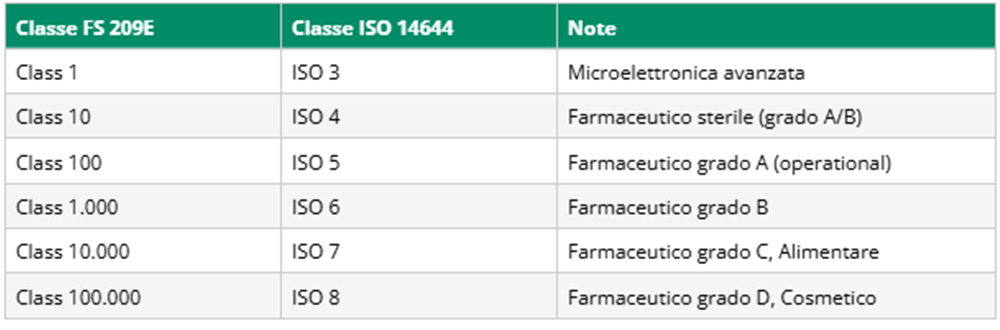
Before the universal adoption of ISO 14644, the standard for classifying cleanrooms in the U.S. was Federal Standard 209E (FS 209E), which classified environments into classes ranging from 1 to 100,000 based on the number of particles ≥0.5 µm per cubic foot of air.
Although officially withdrawn in 2001, the FS 209E is still mentioned in some American contracts and technical specifications.
The conversion table between FS 209E classes and ISO 14644 classes is as follows:
6. Delta 2000: International Experience in Support of Regulatory Compliance
With over twenty years of experience and installations in Italy, Europe, the United States, Canada, and South America, Delta 2000 has developed regulatory expertise that goes far beyond a theoretical understanding of standards.
Each project is tackled using a structured approach that begins with an analysis of the applicable regulatory requirements— ISO 14644, EU GMP, FDA, ISO 13485, HACCP —and culminates in the selection of the most appropriate technical solutions.
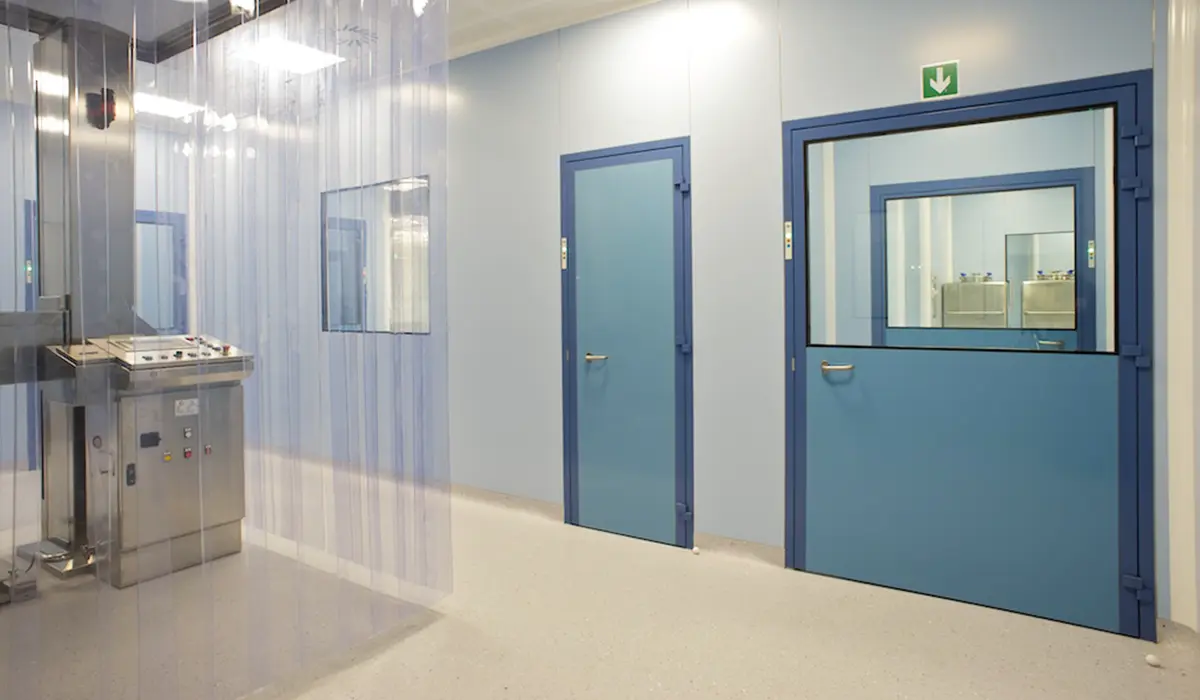
The Delta 2000 modular system — DeltaWALL™, DeltaCEILING™, DeltaDOORS™, DeltaWINDOWS™, DeltaFLOOR™, DeltaFURNITURES™, DeltaPROFILE™, and DeltaPASSBOX™ — is designed to meet the requirements of any ISO class and to be qualified according to the IQ/OQ/PQ protocols required by pharmaceutical regulations.
The technical documentation provided with each installation is structured to directly support audit and inspection activities conducted by regulatory authorities.
Whether the project is in Italy or the U.S., at a pharmaceutical plant or a food processing facility, Delta 2000 guarantees the same build quality and regulatory compliance—with the support of a multilingual technical team and a well-established network of international partners.
Conclusions
The ISO 14644 standard is the global common language for cleanrooms.
Gaining a deep understanding of it—its various components, its applications across different sectors, and its relationship with national regulations such as those of the FDA —is the first step toward designing controlled-contamination environments that are truly compliant, efficient, and durable.
In the upcoming articles in this series, Delta 2000 will explore specific topics in greater depth: doors and passboxes for cleanrooms, solutions for the medical sector, a comparison between modular systems and traditional construction, and much more.
Follow us to stay up to date.
Are you planning to build a cleanroom? Talk to our experts.
Delta 2000 supports companies at every stage of the project: from defining the ISO class to selecting the most suitable modular solutions, through to qualification and post-installation support. We operate in Italy, Europe, the U.S., Canada, and South America.
Contact a Delta 2000 consultant → www.delta-2000.com | info@delta-2000.com | +39 02 9501688