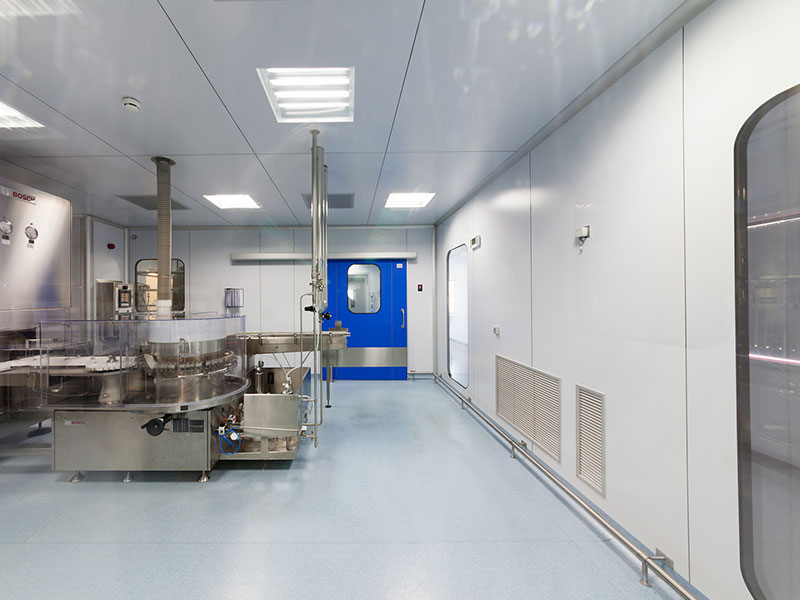
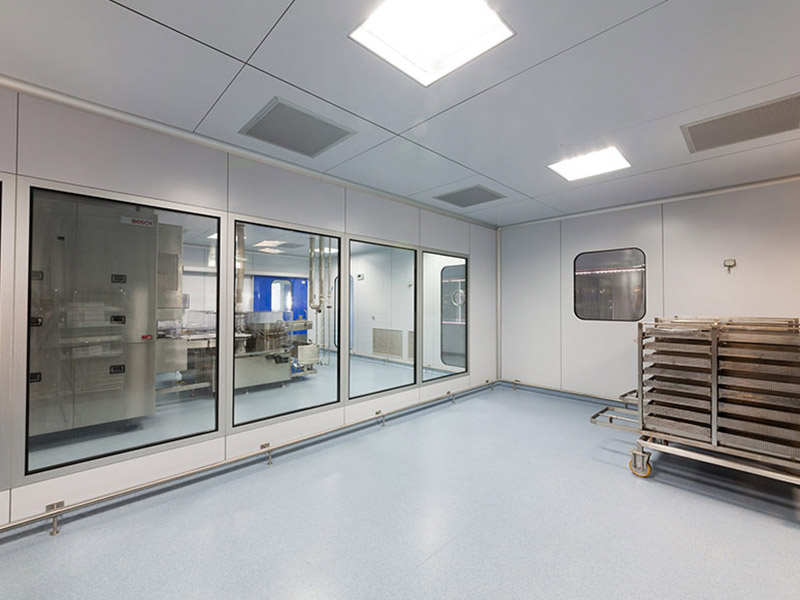
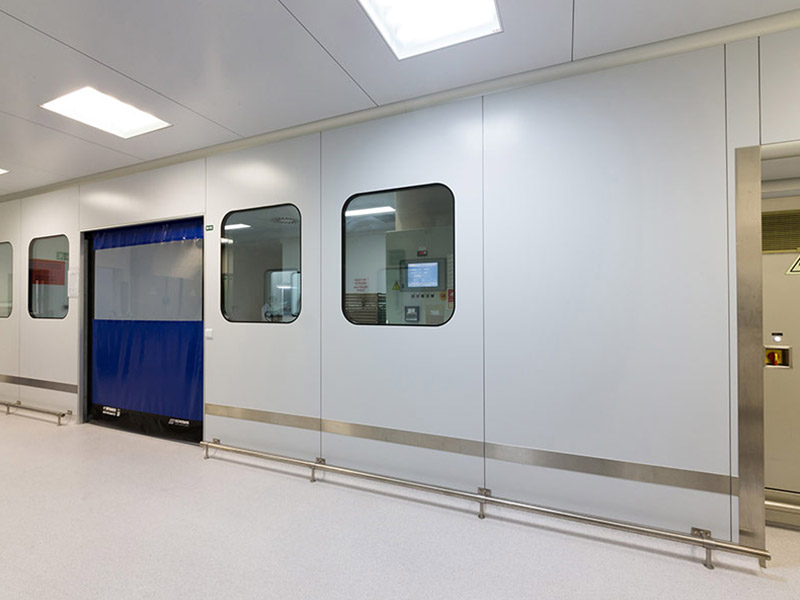
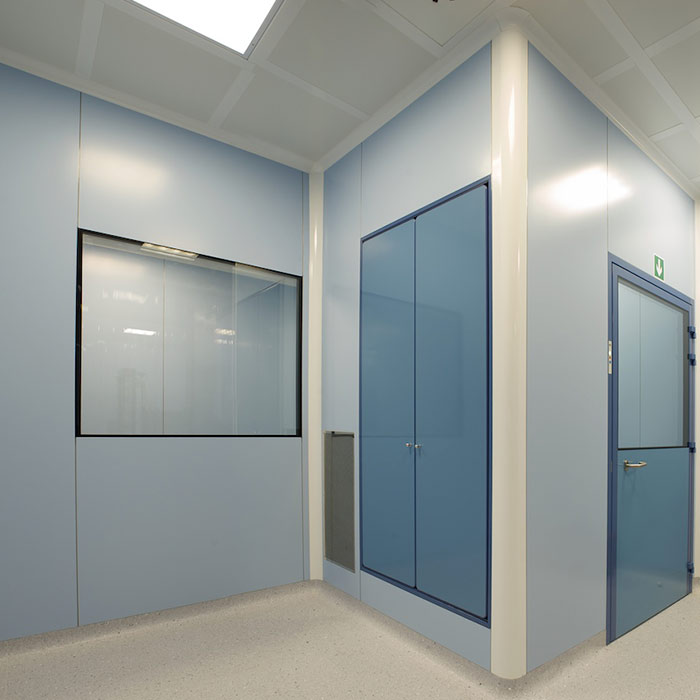
This particular HPL laminated cleanroom panel WALKABLE DeltaCeiling, produced by Delta 2000, a company specializing in cleanroom design, production and installation, is intended for various sectors: pharmaceutical, biomedical, chemical, cosmetic, food and hospital.
DeltaCEILING high-pressure HPL laminate board consists of six or eight layers of Kraft paper impregnated with thermosetting resins and compacted. Decoration is by means of a special decorative paper with a special pattern or colored tint.
Compact layers create a strong, dense, durable surface that is easy to clean and low maintenance. The use of thermosetting resins allows the panel to cure through high temperatures. These panels are ideal for cleanroom applications, ensuring high standards of hygiene and performance.
Polystyrene insulation for HPL modular panels is used in various industries.Polystyrene insulation is used for wall panels, floors, suspended ceilings, and pharmaceutical doors in cleanrooms.
Sintered, closed-cell, isotropic expanded polystyrene panel with class E fire reaction complies with UNI EN 13163 standards and has CE marking. It is suitable for applications requiring good mechanical strength.
The advantages of polystyrene insulation for modular panels include: high insulating power, stability over time, water vapor permeability, water resistance, and mold and bacteria proofing.
These walls are composed of:
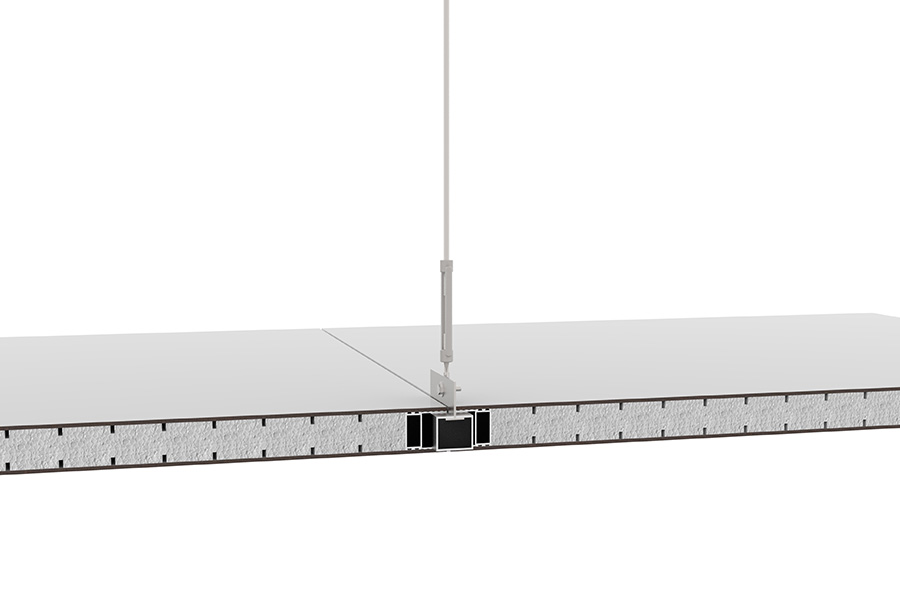
Inner frame made of 2 mm raw extruded aluminum, insulated with polystyrene;
4 mm HPL exterior cladding, for a total thickness of 48 mm;
H-shaped aluminum extrusion bar (2 mm thick) for mounting, ensuring a maximum distance of 4 mm between panels.
For an optimal result in terms of aesthetics, insulation and functionality, the modular walls are siliconized with silicone mastic and anchored to existing floors by rough aluminum profiles.
HPL DeltaCEILING™
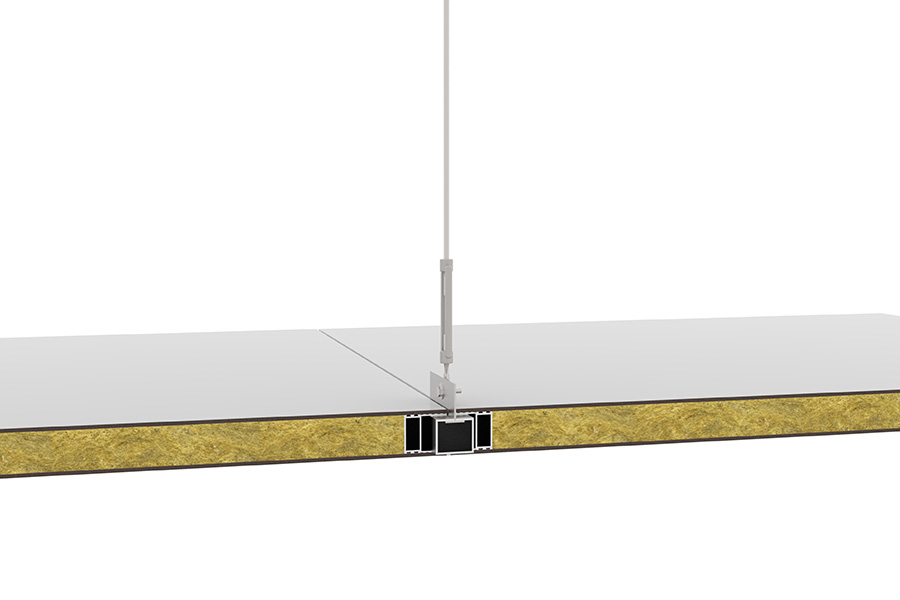
Rock Wool Insulation
Rock wool insulation with aluminum cladding for HPL modular panels finds use in a variety of areas. This insulation is used for wall panels, floors, suspended ceilings and pharmaceutical doors in cleanrooms.
The advantages of rock wool insulation include: excellent sound absorbing capacity, superior insulating value to fiberglass, durable performance, not deteriorating over time, and ability to let moisture escape.
HPL DeltaCEILING Rockwool offers solutions suitable for all types of interior and exterior walls.
These walls are composed of:
Inner frame made of 2 mm raw aluminum extrusion, insulated with oriented fiber rock wool;
4 mm HPL exterior cladding, with total panel thickness of 48 mm;
H-shaped aluminum extrusion bar (2 mm thick) for mounting, allowing a maximum joint of 4 mm.
The walls are siliconized with silicone mastic and connected to the existing floors by rough aluminum profiles to ensure an optimal aesthetic, insulating and functional result.
HPL DeltaCEILING™
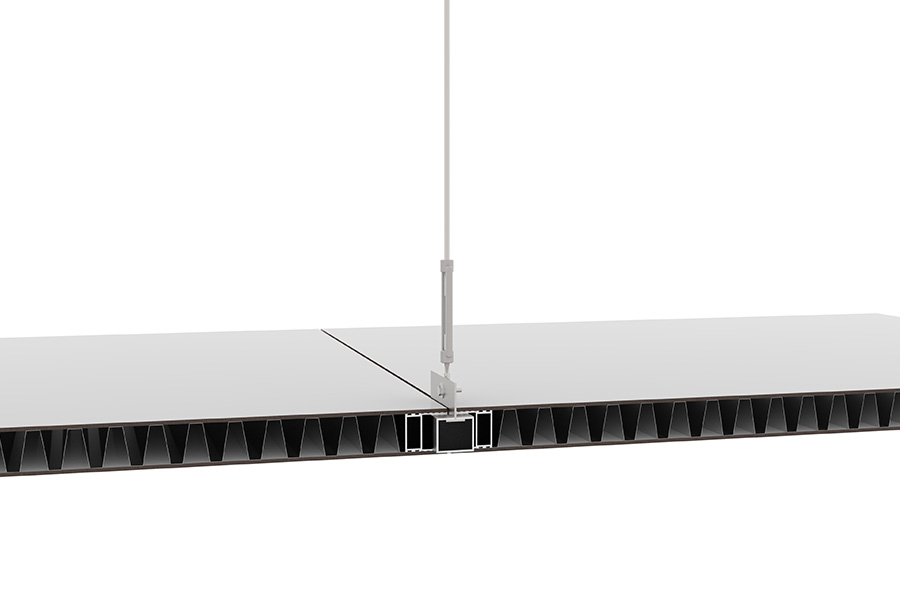
Honeycomb Insulator
Aluminum honeycomb insulation for HPL modular panels is used in various industries. This type of insulation is used in wall panels, floors, suspended ceilings and pharmaceutical doors in cleanrooms.
The advantages of honeycomb insulation include light weight, stiffness, fire resistance, compression, trim, corrosion resistance and flat surface.
These walls are composed of:
Inner frame made of 2 mm raw aluminum extrusion, insulated with aluminum honeycomb or corrugated sheet;
4 mm HPL exterior cladding, for a total thickness of 48 mm;
H-shaped vertical aluminum extrusion bar (2 mm thick), for mounting with a maximum joint of 4 mm.
These walls should also be siliconized with silicone mastic and attached to existing floors by rough aluminum profiles.
High-pressure lamin ate also known as HPL (high-pressure decorative laminates).
Layered HPL
Features, uses and benefits for indoor environments
HPL laminate is a material mainly used indoors with special climatic conditions, ideal for cleanroom but not recommended for outdoor use.
It is composed internally of one or more layers of cellulosic fibers impregnated with phenolic resins, while the surface consists of cellulosic fibers impregnated with thermosetting resins for aesthetic purposes.
Standard colors: 4/5 weeks from drawings approval, Non-standard colors: 8 weeks laminated delivery time. 4/5 weeks from approval of drawings
Sound insulation (dB):
Rw (C;Ctr)=21(-1;-2) dB
Outer coating:
HPL (High Pressure Laminate)
External cladding
Thickness:
4 mm
Reaction to fire:
Class B,s1-d0
Formaldehyde release:
Class E1
Abrasion resistance:
Turns: IP > 150 EN 438-2.10
Scratch resistance:
Strength: Grade > 3 EN 438-2.25
Impact resistance:
Test carried out with small diameter ball. Impact force: N>20 EN 438-2.20
Gloss
Not Available
Crease resistance
Not Available
Peelable
Non Disponibile
Inner frame
Scratch resistance:
Perimeter "C" profile made of 2 mm thick extruded aluminum with double reinforcing ribs cut at 45° and assembled using aluminum brackets.
Insulation
Insulation:
Aluminum trapezoidal sheet metal Density 116 kg/m³
Thickness:
40 mm
Reaction to fire:
Class A1 EN 13501-1
Thermal conductivity λD(W/mK):
NPD EN 12667
Available colors
Standard
Bianco Primavera
Bianco Primavera
Sabbia
Silver Blue
Bianco Primavera
Bianco Primavera
Sabbia
Silver Blue
Non-Standard
Rosso Cavallino
Verde Maquis
Blu Faenza
Blu Amorgos
Grigio Tempesta
Grigio Monviso
Giallo Africa
Avorio
Porpora
Nero
Rosso Cavallino
Verde Maquis
Blu Amorgos
Blu Faenza
Rosso Cavallino
Verde Maquis
Blu Amorgos
Blu Faenza
Grigio Tempesta
Grigio Monviso
Giallo Africa
Porpora
Avorio
Nero
Rosso Cavallino
Verde Maquis
Blu Amorgos
Blu Faenza
Nero
Grigio Tempesta
Grigio Monviso
Avorio
Giallo Africa
Porpora
Delta2000 world leader
Cleanroom Design
During the design phase, the reference sector, type of use, and current regulations are taken into consideration in order to create a layout that meets the highest standards of efficiency and safety. In addition, the integration of the Clean Room into existing processes is also taken into account.
Cleanroom installation
Once designed, built, and tested, the Cleanroom is installed on site. We use our teams of qualified installers with a very high level of professionalism specific to the sector, who fine-tune all the specifications in the project.
Cleanroom Production
The characteristics of our production make our clean rooms unique in many ways: customization and the possibility of non-standard designs; flexibility in terms of timing; use of Italian and European components; and maximum punctuality in delivery.
Contact us
Fill out the following form to request information